.jpg)

Congratulations if you've decided to become a private tutor. It's a job that can be lucrative, rewarding, and flexible. But for most new tutors, the hardest part isn't the teaching, it's the marketing and getting started.
Knowing how to advertise your tutoring services effectively depends partly on the lesson format you want to offer. Before you write a single ad, get clear on whether you want to teach online, in person, or both, since this decision shapes almost every marketing choice that follows.
This guide walks you through how to promote tutoring services step by step, once you’ve decided to become a tutor, from defining your audience to writing ads that convert, both online and off. Wether you're exploring online private tutoring as your primary route or side job.

Key takeaways on how to advertise your tutoring services
- Define your target audience (age, level, needs, goals) before choosing any advertising channel.
- Subject choice matters: undersupplied subjects (like Piano, Spanish, or Italian) face far less competition than oversupplied ones (like Maths or English).
- Your lesson format, online, in-person, or both, determines where and how you should advertise.
- Not all tutoring platforms are equal to advertise your tutoring services: compare visibility, trust signals, fees, and audience fit before committing to one.
- Pricing depends on subject, level, experience, and format, there's no single right number.
- Private tutoring is legal in the UK, but income above a certain threshold must be reported to HMRC, and a DBS check can strengthen parents' trust.
- Platforms like GoStudent can handle student matching and visibility for you, a useful option alongside building your own independent presence.

Why does good advertising matter?
Even the best tutor in the country won't get bookings if nobody knows they exist. Advertising is what turns your skills into actual income, whether tutoring is a side hustle covering a few extra costs or your main source of income.
Good advertising does three things at once:
- It puts you in front of the right students: this will save you from wasting time on and effort enquiries that were never a good fit,
- It builds trust before a parent or student ever messages you: since a clear, well-written ad signals professionalism the same way a scruffy one signals the opposite,
- And it compounds over time: a strong online profile keeps working for you long after you've stopped actively posting, while local flyers and referrals keep bringing in students long after the initial effort of putting them up.
Tutors who treat advertising as a one-off task, rather than an ongoing part of the job, tend to see inconsistent bookings. Tutors who advertise deliberately, matching their message to the right audience and the right channel, tend to build a steady, predictable stream of students instead. If your goal is to make tutoring genuinely profitable rather than occasional, this is the step that makes the difference.
|
Want to keep all these steps and tips in one place?
Download our free tutoring advertising checklist, a simple, step-by-step tracker covering everything from defining your audience to setting your price and checking your legal status. Tick off each task as you go and make sure nothing slips through the cracks as you build your tutoring business. |

Understand your target audience before you advertise
Not every tutor is advertising to the same person, and that's the first thing to get clear on. Before writing any ad or choosing any channel, decide exactly who you want to teach. This could a specific profile or multiple types of student profiles, you don’t have to limit yourself to a single one.
To clear this out for yourself, ask yourself these questions:
- Which age group or school level do you want to work with, primary, secondary, GCSE, A-Level, or university? Do you want to focus on tutoring adults?
- What specific needs can you cove ? Exam preparation, confidence-building, SEND support, or catching up on missed content?
- What goals are your ideal students working towards? Grade improvement, passing an exam, building more confidence, mastering subjects or simply enjoying a subject more?
This clarity shapes everything that follows: your ad copy, the channels you choose, and even your pricing. A tutor targeting anxious GCSE students needs a different message to one targeting confident adult learners picking up a new language.
If you do choose to tend to multiple goals, needs and profiles of students, note that this will need to be clearly reflected in your ad when the moment comes for you to write it.
Which subjects are most profitable to advertise?
Deciding where to advertise tutoring services partly comes down to which subject you teach and how saturated that subject already is. According to FindTutors' 2025 platform data, covering tens of thousands of student requests and active tutor profiles across the UK, demand and supply are far from evenly matched across all subjects.
|
Subject |
% of student requests |
% of tutors offering it |
Signal |
|
Maths |
18.72% |
22.90% |
Oversupplied |
|
English |
8.64% |
14.97% |
Oversupplied |
|
English as a foreign language |
3.97% |
9.48% |
Oversupplied |
|
Spanish |
6.40% |
4.42% |
Undersupplied |
|
Italian |
2.90% |
1.05% |
Undersupplied |
|
Piano |
2.38% |
0.41% |
Severely undersupplied |
|
Japanese |
1.64% |
0.38% |
Severely undersupplied |
Maths, English, and EFL all have large, well-established tutor pipelines, which means more competition for tutors offering these subjects. By contrast, Piano tutoring faces a near six-to-one demand-to-supply gap, and niche languages like Italian, Japanese, German, and Korean all show demand running at two to four times their tutor supply.
If you teach one of these undersupplied subjects, lead with it in your advertising. You'll face far less competition than a tutor offering Maths or English in the same city. For a full breakdown by subject and by city, see FindTutors' tutoring statistics in the UK. For more on choosing a subject to specialise in, we also cover the best subjects to tutor online here in our blog.
|
Note: You don’t have to limit yourself to tutoring a single subject. On the contrary you can choose multiple ones as a strategy to diversify your offer and services to make your tutoring activity profitable. We just recommend you clearly communicate all subjects you can teach in your ad strategy so that students can know this. |
Choosing your tutoring format: online, in-person, or both
Once you know your audience and subject, the next decision is how you'll actually deliver lessons. This matters more than it might seem, because your format shapes almost everything that follows: which channels you advertise on, how far you can reach, and even how you price your sessions.
Online tutoring
|
Advantages |
Considerations |
What you'll need |
Best suited to |
|
No travel, teach from anywhere in the UK. |
Relies on a stable internet connection. |
A computer or tablet. |
Tutors must comfortable using digital tools for a proper lesson (and students as well) |
|
A far wider pool of students, not limited to your local area. |
Less face-to-face contact than in-person teaching, which some families and students might need. |
A reliable internet connection. |
Tutors wanting to reach students UK-wide. |
|
Flexible hours, including evenings and weekends. |
A short learning curve with video call tools, depending on how comfortable the students and their families are with technology |
Video conferencing software (Zoom, Google Meet, or a platform's built-in classroom). |
Busy or irregular schedules. |
|
Save on transportation costs (bus fares, taxi, gas, etc..) |
A dedicated space to teach properly (quiet room, organized and comfortable space to teach well) |
Tutors based in farther locations, far from big cities |
In-person tutoring
|
Advantages |
Considerations |
What you'll need |
Best suited to |
|
More personal, reassuring contact, especially for younger students. |
Travel time between sessions. |
Reliable transport suited to your local area and schedule |
Primary school or early secondary students. |
|
Easier to spot where a student is genuinely struggling. |
A more limited geographic reach. |
Good scheduling and organizational skills to manage travel between lessons. |
Tutors with a car or a defined local area with good public transportation |
|
Often commands a higher rate, since travel costs are built in. |
Travel costs to factor into your pricing. |
Families wanting close, hands-on support. |
How to choose the format that suits you
Faced with these two options, a few practical questions can help you decide:
- Your real availability: if your free time is scattered across the week in short windows, online lessons fit a fragmented schedule far more easily. If you have larger blocks of free time (a full afternoon, a weekend), in-person teaching is simpler to organise without losing time between appointments.
- Your equipment and environment: teaching online requires a quiet space, a stable connection, and basic kit (webcam, microphone). If your home doesn't suit this, or you'd rather travel to your student, in-person teaching may work better for you.
- The audience you want to reach: younger primary-age students often need a reassuring physical presence, while secondary students and university students typically adapt well to remote lessons, sometimes preferring them for the flexibility.
- Your tolerance for travel: some tutors value the direct contact that in-person teaching offers; others see travel time as a cost to avoid altogether. This is a personal preference that matters as much as the practical factors above.
Nothing stops you from combining formats if your schedule allows it. Plenty of tutors teach online during the week and in person at weekends, for example.
These criteria won't cover every situation. Every tutor has their own constraints and preferences, some difficult to anticipate in advance. The best approach is to take a moment to weigh what genuinely fits your life, your goals, and your personality, rather than following a single template.
To help you decide, ask yourself:
- Which format could I sustain long-term without it becoming a burden?
- Do I have the time, motivation, or means to travel to students regularly?
- Am I comfortable teaching remotely, with the digital tools that involves?
Private tutoring is already common in the UK. The Sutton Trust reports that 27% of 11 to 16-year-olds in England and Wales have had private tuition, rising to 41% in London, the highest share anywhere in the country. Whichever format you choose, that scale of demand means there's room for tutors across both formats, so pick the one that fits how you actually want to work.

Where to advertise your tutoring services
How you advertise depends directly on the format you chose above. Online lessons call for a digital-first strategy; in-person lessons still benefit from strong local, offline visibility. Most successful tutors combine both.
Where and how to find students online
The majority of tutoring searches now happen online, which means this is where most of your effort should go if you're offering online lessons (or want to widen your reach beyond your local area).
1 - Your own website
A simple site with a homepage, bio, service page, and contact details gives you a permanent, professional home base that you fully control, unlike a social profile or a listing you don't own. It won't drive traffic immediately, SEO takes time to build, but it's a solid long-term anchor for all your other marketing, since every flyer, social post, or referral can point back to it.
This option suits tutors who plan to tutor for the long term and want full ownership over how they present themselves, rather than depending entirely on someone else's platform. It does require some time investment upfront, so it's less useful if you're looking for students quickly.
2 - Social media
Facebook groups let you reach local parent communities directly and often for free, which makes them a strong option if you're targeting a specific area or age group. LinkedIn builds professional credibility, useful if you're tutoring adult learners, university students, or professional upskilling clients who expect a more formal presence. Instagram or TikTok work well for short explainer content that showcases your teaching style, helpful if your strength is explaining concepts clearly and you're comfortable on camera.
This option suits tutors with the time and inclination to post consistently, since social media rewards regular activity over one-off posts. It costs nothing beyond your time, making it accessible whatever your budget.
3 - Free tutor listings and classified sites
Free directories and general classified sites (such as Gumtree) can put your profile in front of people actively searching for a tutor, without any advertising spend. Because these sites aren't tutoring-specific, competition for attention is often lower than on a dedicated tutoring platform, but the trade-off is that visitors may be less qualified leads, so expect a mix of enquiries.
This option suits tutors on a tight budget who want an easy, low-effort way to add another channel alongside their main marketing, rather than relying on it exclusively.
4 - Tutoring platforms and agencies
Registering with a dedicated tutoring platform is often the fastest route to consistent bookings, since students and parents are already searching there with clear intent to book a tutor. GoStudent, for example, is one option that matches tutors with students actively looking for online lessons, alongside many other independent platforms and agencies worth comparing.
This option suits tutors who want to spend their time teaching rather than marketing, since the platform handles visibility and, in many cases, some of the administrative and matching work for you. It's a strong starting point if you're new to tutoring and want to build reviews and experience before investing heavily in your own website or social presence.
How to choose a tutoring site to advertise your tutoring servicesNot all platforms are equal, so weigh a few things before committing your time to one:
The best way to find the ideal tutoring platforms for you is to try a few of them out. We’d recommend picking 3 and trying them out at the same time, so you can have live comparisons of which platforms work best for you and save time in the long run. |

Where and how to find students offline
If you're teaching in person, local visibility still matters, and some of the best offline tactics cost nothing. Knowing how to promote tutoring services in your own area often comes down to consistent, low-cost visibility rather than big spending.
1 - Business cards
Keep a stack on hand for any opportunity, school gates, community events, or casual conversations. This option works well because it costs very little upfront and lets you hand over your details the moment someone expresses interest, rather than asking them to remember your name later.
2 - Local schools
Ask if they'll display or share your details, particularly if it's a school you attended yourself, since existing familiarity often makes staff more willing to help. This suits tutors targeting a specific age group or subject closely tied to the school curriculum, as it puts your details directly in front of the exact families most likely to need you.
3 - Word of mouth
Start with friends and family and ask if they know anyone needing tutoring support. This costs nothing and often brings in your most reliable early students, since a personal recommendation carries far more trust than a cold advert, making it a smart first step for any tutor just starting out.
4 - Community boards and local businesses
Newsagents, libraries, and community centres often allow free postings. This option suits tutors wanting to build a strictly local presence, since it puts your ad where people in your immediate area naturally spend time, without requiring any online skills or budget.
5 - Local networking events
Town hall meetups or parent groups can be a low-cost way to build local trust. This works particularly well for tutors who are comfortable speaking to people directly, since face-to-face conversations tend to build confidence in your teaching faster than any written ad could.
How to write the perfect ad to promote your tutoring services
Writing a good ad isn't one-size-fits-all. An ad built for an online platform needs different information to a poster pinned up at a school gate, so treat the two separately.
How to write a tutoring ad that converts (for online ads)
Whether you're posting on a tutoring platform, your own site, or social media, your online ad should always include the following:
|
Element |
What to include |
|
Subject |
Be specific, "GCSE Maths" converts better than just "Maths". |
|
School level |
State clearly whether you cover primary, secondary, GCSE, A-Level, or university, etc. |
|
Teaching method |
Briefly describe how you help students understand new concepts, how you like to teach, approach concepts during your lessons and how you work overall. |
|
Social proof |
Include testimonials from former students, where you have them. Some tutoring platforms allow you to request reviews from past students. |
|
Logistics |
State your price per session and whether you teach online or in person. |
|
Trust signals |
Make sure to inspite trust, either by citing the number of years of experience, numbers of students taught, through confirming you have a DBS check, etc. |
|
Who you are |
Explain key information about who you are and your background (experience, teaching, qualifications, relevant skills, etc.) |
A parent or student browsing tutoring ads is often unsure exactly what they need. Your ad should answer that uncertainty directly by showing your qualifications, your approach, and enough detail to build confidence before they even message you.
Writing a real-world tutoring poster or flyer to attract students
A poster or flyer works completely differently to an online ad. In print, you have about three seconds to catch someone's attention as they walk past a noticeboard, so the ad needs to lead with a strong visual hook rather than a wall of text.
Good print ads tend to:
- Use a bold, large headline stating the subject and level ("GCSE Maths Tutor" beats a paragraph of text every time),
- Keep body text minimal, just enough to state your experience, price and necessary information,
- Include tear-off tabs with your phone number or a QR code linking to your profile (or both),
- Use a clean layout with plenty of white space so it's readable from a distance,
- Add a friendly, approachable photo if possible, this builds trust faster than text alone.
Print ads work best pinned near where your target audience actually goes: school noticeboards for younger students, university library boards for undergraduates, or community centres for adult learners.
What to charge for tutoring lessons
Pricing depends on a handful of key factors: your subject, the student's level, your own experience and qualifications, your location, and whether you teach online or in person. Online lessons are typically priced slightly lower than in-person ones, since there's no travel time involved, and specialised or exam-level subjects generally command higher rates than general primary support.
There's no single correct figure, and getting this right involves weighing more than just what to charge. For a full breakdown of the factors that affect tutoring rates, we’ve got a guide on how much a tutor should be paid per hour.

Is private tutoring legal? Tax and status basics
Yes, private tutoring is legal in the UK and unregulated as a profession, meaning no formal qualification is legally required to teach. That said, if tutoring becomes a regular source of income, you're generally expected to register as self-employed with HMRC and report earnings above the relevant threshold. For a full breakdown of registration, Self Assessment, and what expenses you can deduct, you can check out our guide on whether private tutors in the UK need to pay tax or not, depending on your own situation.
An Enhanced DBS check isn't a legal requirement for independent tutors, but it's one of the strongest trust signals you can offer parents, and many platforms require one before letting you teach. Our step-by-step DBS guide covers cost, process, and renewal if you want to get one.
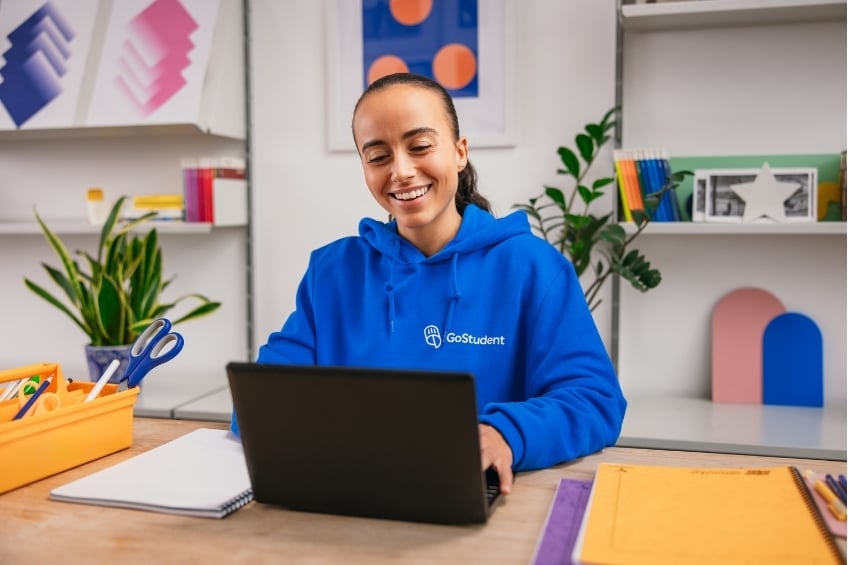
Advertise your tutoring services on GoStudent
If you're still weighing up where to advertise tutoring services, GoStudent is worth a closer look, particularly if you want the platform itself to handle the heavy lifting of finding and matching students, rather than building your own visibility from scratch.
Here's what makes it a strong option to consider:
- Built-in student matching: GoStudent finds and matches students to tutors based on subject, level, and learning goals, so you spend less time chasing enquiries and more time actually teaching. This solves one of the biggest headaches new tutors face: getting in front of the right people in the first place.
- No marketing admin required: Since the platform handles visibility, you don't need your own website, social media presence, or paid ads to get started. This is especially useful if you're still working out how to advertise your tutoring services and want to start earning while you build your marketing skills elsewhere.
- Flexible, fully online format: All lessons happen through GoClass, GoStudent's virtual classroom, meaning you can teach from anywhere with an internet connection, at hours that suit you, including evenings and weekends.
- Support tools built in: Features like automated Lesson Summaries and Magic Quizzes handle some of the admin and follow-up work that independent tutors usually have to manage manually, freeing up time you'd otherwise spend on lesson prep and reporting.
- Loyalty and referral bonuses: Your hourly rate can increase the more lessons you teach over time, and referring other tutors or students can bring in extra income on top of your teaching earnings.
- A side hustle or a bigger commitment: Whether you're looking to earn a few extra hours a week or build a more substantial income, the platform accommodates both, since lesson volume is entirely up to your own availability.
For a tutor still figuring out how to promote tutoring services, registering with a platform like GoStudent removes one major variable from the equation: visibility. Instead of spending weeks building an audience before your first booking, you can start teaching almost immediately, then use the income and experience gained to fund or inform your other marketing efforts, whether that's a personal website, social media, or local advertising down the line.
As with any platform, it's worth weighing this against your own goals. If full pricing control and building your own brand matter most to you, an independent website or listing site may suit you better. But if getting matched with students quickly and having built-in classroom tools matters more, GoStudent is a solid option to add to your comparison shortlist.

You’re all set to advertise your tutoring services like a pro
Successfully promoting your tutoring services starts long before you write your first ad. Get clear on who you want to teach, choose your format deliberately, and pick a subject where demand outpaces supply if you can. From there, match your advertising, online or offline, to where your ideal students are actually looking, and write ads suited to each medium.
Whether you build your own website, lean on local networking, or register with a platform like GoStudent as an online tutor, consistency across channels is what turns a side hustle into a steady stream of students.

SourcesStatistical and data sources🔗 Private Tutoring Statistics in the UK for 2025 — FindTutors Internal references🔗 The best subjects to tutor online — GoStudent |

.jpg?upsize=true&upscale=true&width=100&height=100&name=math-square-root%20(1).jpg)



.jpg?width=415&height=205&name=geography-math-study%20(2).jpg)

.jpg?width=415&height=205&name=online-job-interview%20(1).jpg)