.jpg)
Decisions, decisions!
While having a choice of language apps can be an effective way to discover your own personal learning style, many people find themselves jumping from one option to another, stalling their progress at the very first vocab exercises.
Whatever your target language may be, you've likely come across Babbel and Duolingo in your search for the perfect app. Both language apps can be effective options for students in search of independent learning solutions, but when it comes to efficiency - building actual conversational skills that you can use in real life - which one helps you find your voice?
In this Babbel vs Duolingo breakdown, we’ll see which app is best for speaking skills and truly delivers on its promise of fluency!
Content
Key takeaways
Babbel: a structured path to fluency
Duolingo: gamified grammar practice
The app that makes a real difference
GoStudent: personalised 1-1 language tuition
Babbel vs Duolingo vs GoStudent: feature and pricing comparison table
The best language app is a personal choice
Key takeaways
- The right language app is a personal choice - your learning goals, style, preferences, and schedule all influence the progress you're able to make with different apps.
- Babbel takes a traditional approach to language acquisition, with a structured curriculum focused on detailed grammar explanations for students seeking in-depth study options.
- Duolingo uses a system of gamified streaks and league tables, making it suitable for casual learners boost basic vocabulary through short daily practice sessions.
- GoStudent combines human expertise and AI technology to build real-world conversational skills and exam success through personalised language-learning paths.
Babbel: a structured path to fluency
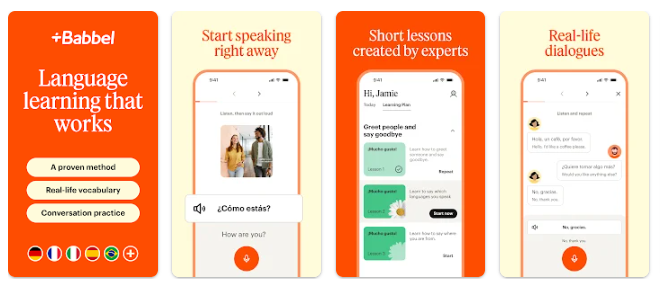
The Babbel app is a professional and helpful tool for learners who prefer a traditional approach to language learning. Instead of simply learning words in isolation, Babbel allows users to expand their understanding of grammar, improving their spoken fluency.
For 2026, the app's learning process has been further enhanced by Babbel Speak, an AI language learning program that allows you to engage in conversation practice within simulated situations that reflect real-life interactions. This can be helpful for students who find themselves feeling anxious when speaking their target language, allowing them to move past basic vocabulary and develop conversational skills in a low-pressure, digital environment.
Pros
- Expert course development: Unlike many apps that use AI-generated content, Babbel's lessons are designed by language experts to ensure high-quality grammar instruction.
- Authentic audio: Recordings feature native speakers rather than robotic voices, which is vital for developing speaking skills and picking up nuances in a new target language.
- In-depth grammar support: Babbel provides clear grammar rules in context, with explanations that help students to understand challenging concepts.
- Flexible learning path: Learners have full access to all levels from day one, allowing you to skip ahead to topics that match your current proficiency level.
Cons
- No free version: While you can try a free lesson, you need a subscription for full access to the Babbel app.
- Less gamified: It can lack the 'get-you-hooked' quality that helps build daily practice habits found in other language apps.
- Smaller language catalogue: While Babbel does provide courses for multiple languages, its offer is smaller than its competitors, with a limit of 14 popular languages.
Best for: Serious learners and students looking for structured lessons, comprehensive grammar explanations, and a set learning path toward fluency.
Duolingo: gamified grammar practice
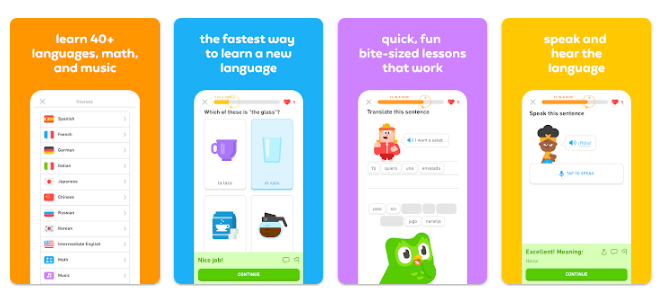
A popular choice for casual learners, Duolingo finds the fun in language study sessions. The app's learning experience is build on bite-sized sessions and positive reinforcement, Additional features launched this year as part of Duolingo Max also allow for AI video calls with Lily, one of the app's characters, to enhance speaking practice and conversation skills.
Duolingo employs an adaptable scheduling system, with reminders to practise in order to maintain streaks and leaderboard positions. This competitive element of the app can be useful for engaging younger students, in addition to being helpful for anyone who struggles to maintain consistent daily practice habits.
Pros
- Free app: The standard free version of the Duolingo app offers a wide range of content, making it possible to pick up a degree of fluency without a subscription.
- Highly engaging: Awards and league tables encourage daily lessons, helping you learn new words and build basic vocabulary through consistent repetition.
- Duolingo Max and Super Duolingo: Paid tiers offer unlimited hearts and AI features that explain incorrect answers, acting as a digital tutor for foreign languages.
- Wide variety: You can study multiple languages simultaneously, learning French, Spanish or Italian, in addition to niche and fictional languages like High Valyrian!
Cons
- Fragmented grammar: Duolingo lacks the deep grammar instruction found in other apps, meaning you may learn a language's words without understanding how to apply the underlying grammar rules.
- Locked learning path: Unlike both Babbel, GoStudent and some other platforms, you can't always skip ahead easily in Duolingo if you find the content too easy - students must complete each level of their learning path.
- Focus on translation: Many of Duolingo's speaking exercises are 'repeat after me' tasks that can lack the cultural context required for real-life conversations.
Best for: Casual learners and beginners who want a fun, low-commitment way of building basic vocabulary and maintaining a daily language habit.
The app that makes a real difference
While language learning apps like Babbel and Duolingo can be helpful springboards, they often reach a 'fluency ceiling'. To truly master a new language, you need the patience, nuance, and cultural expertise that only a human tutor can provide.
GoStudent: personalised 1-1 language tuition
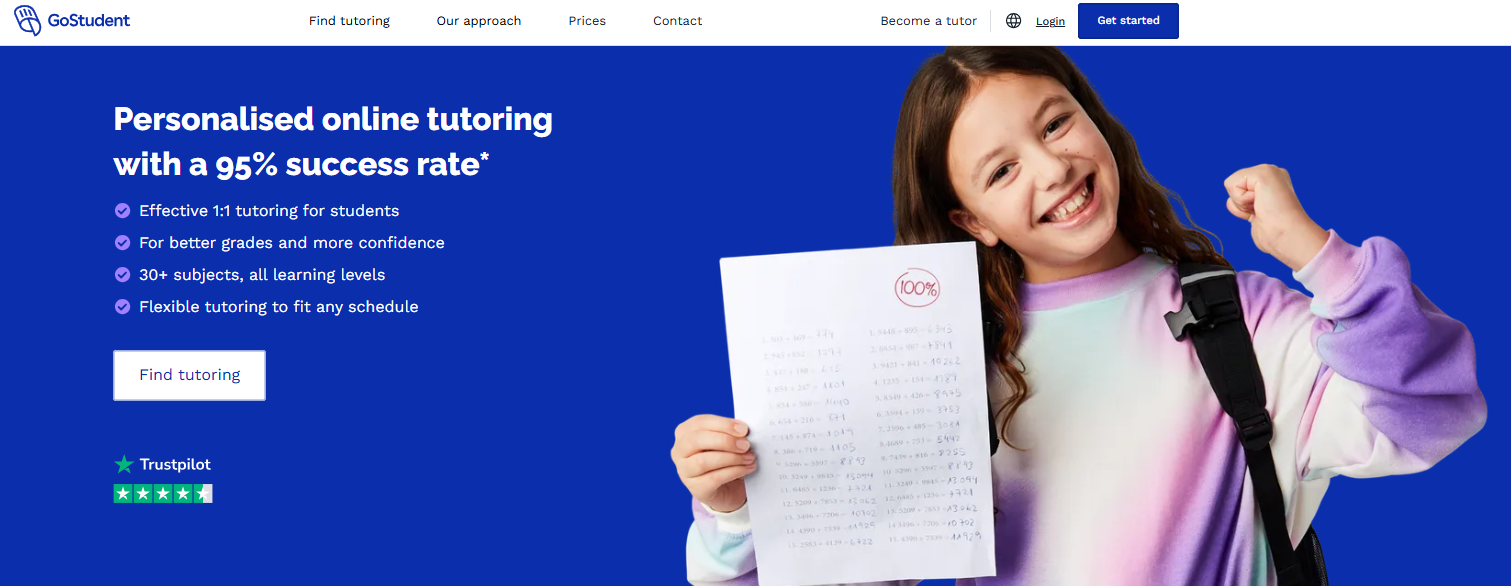
GoStudent bridges the gap between learning words and actually speaking a foreign language with confidence. The platform's approach combines the tech-forward convenience of language learning apps with the high-impact results of live interactive tuition, combining AI-powered lesson summaries with live online language classes.
Contrary to other language-learning solutions on the market, GoStudent doesn't take a 'one size fits all' approach. Each student's learning path is custom-built to address their specific goals, whether that’s preparing for GCSE success or simply increasing confidence in conversational skills.
Why GoStudent stands out:
- The GoStudent app is free to download.
- Personalised support: GoStudent matches students with knowledgeable, vetted private teachers who work to expand on their current proficiency level.
- Real conversation: Unlike an app-based language learning program, our two-way video classes allows for authentic conversation practice with cultural insights and connection.
- Simple management: The GoStudent website allows you to manage lessons schedules, upload documents, access learning resources, and track language progress with ease.
Best for: Young learners who need long-term support for academic language learning.
Babbel vs Duolingo vs GoStudent: feature and pricing comparison table
|
Feature |
Babbel |
Duolingo |
GoStudent |
|
Best for |
Structured self-study for adult learners |
Fun habit-building for casual language leaners |
Fluency and exam success for language students |
|
UK price |
~£17.99 per month
|
Free with ads
£10.99 per month for Super Duolingo)
£19.99 per month for Duolingo Max) |
~£28 per month (12 lessons per month with a 12-month subscription)
|
|
Speaking |
Scenario-based AI dialogue |
Repetition exercises and AI video calls |
Live 1-to-1 conversation with a private language tutor |
|
Grammar |
In-depth and structured |
Minimal, AI-generated |
Personalised guidance from a private tutor |
|
Languages |
14 (mostly European) |
40+ (including niche and fictional languages) |
Range of global languages |
|
Learning path |
Academic and thematic |
Gamified and linear |
Bespoke classes tailored to student's goals |
|
UK exam prep |
Foundational grammar |
General vocabulary only |
Expert GCSE and A-Level tuition |
The best language app is a personal choice
The right language app is the one that fits with your language learning goals:
- If you want structured lessons and grammar rules, Babbel could be a good option.
- If you're looking for a fun way to build daily practice habits, Duolingo can be a helpful start.
- For lasting conversation skills, speaking exam techniques or confident travel, GoStudent is the top choice.
Ready to find your voice? Book a free lesson with GoStudent today and connect with a world-class language tutor who makes learning truly engaging!

.jpg?upsize=true&upscale=true&width=100&height=100&name=math-square-root%20(1).jpg)