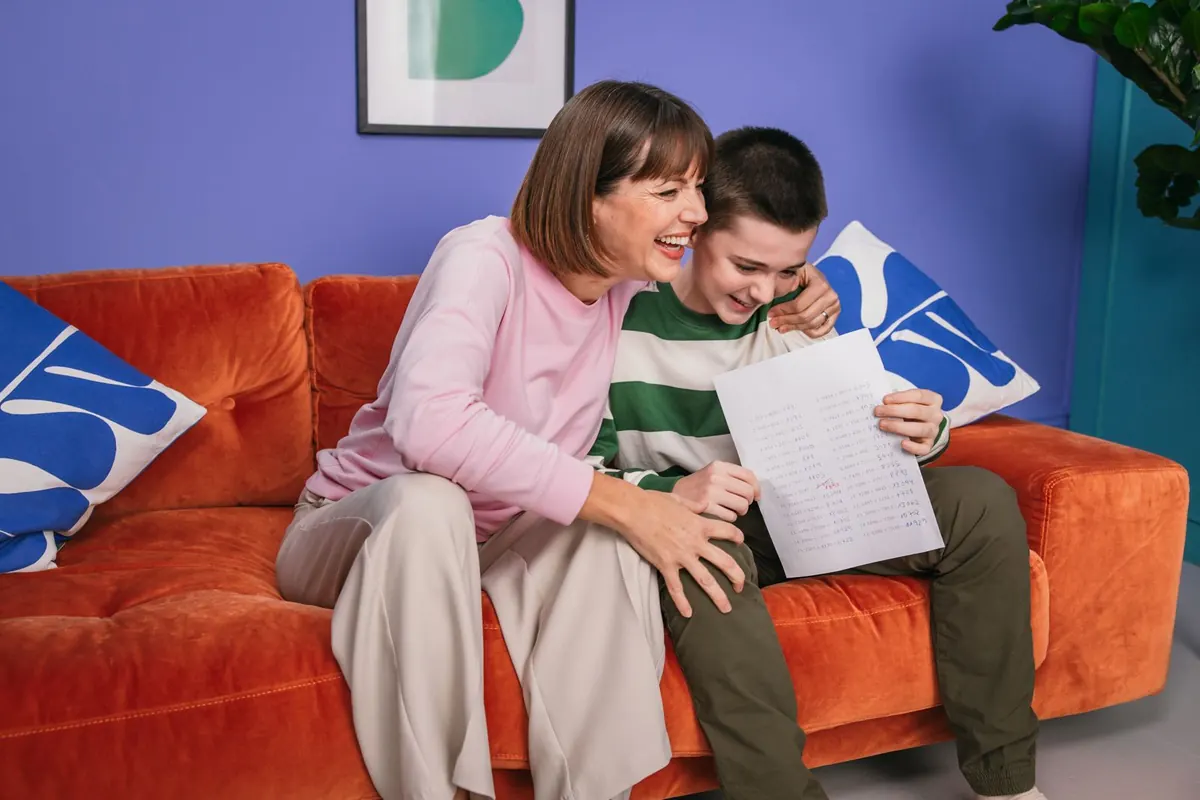
Grace, 15, is in Year 10 in Liverpool and has dyscalculia. Her mum, Donna, tells her story.
What was the problem?
Grace was working at grade 1-2 in maths and had been placed in the Foundation tier with a low predicted grade.
What had they tried before?
Extra worksheets sent home by the school for a few months, a tutoring app downloaded onto her tablet, and some help from her older brother at weekends.
What changed with GoStudent?
A tutor who used visual methods and real-life examples, with a free tutor switch available if the first match wasn't right.
What was the result?
Grace's grade 1-2 became a grade 4 in the summer exam.
Grade 1-2 → a Grade 4
GCSE Maths · Foundation tier placement → summer examUp 2 to 3 grades in 12 months · 2 lessons a week
DODonna, Grace's mumMum's voice
Autumn: placed in Foundation tier, and a low predicted grade
Grace has dyscalculia, and by the start of Year 10 she'd more or less given up on maths, telling us flatly that numbers simply didn't work for her the way they did for everyone else. Being placed in the Foundation tier with a predicted grade 1-2 confirmed what she already believed about herself, and it took her a while to even agree to try something new.
Why extra worksheets and an app weren't the answer
The school sent home extra worksheets for a few months, and we downloaded a well-reviewed tutoring app onto her tablet, with her older brother helping out at weekends when he could. None of it addressed the actual way Grace processes numbers, so she was simply repeating the same confusion on paper and on a screen instead of making any real progress.
How we found a different way in
Visual methods instead of abstract numbers: diagrams, physical objects and real-life examples rather than symbols alone.
A free tutor switch available: knowing we weren't stuck with the first match if it didn't click.
Lesson summaries each week: a record of small progress that was easy to miss day to day.
“My tutor showed me maths with actual things, not just numbers on a page. That's when it started to make sense.”
Grace, 15
The doubt we had at the start
I wasn't sure any tutor, however experienced, could really work around something as specific as dyscalculia, since even some teachers at her school seemed unsure what to do with it. The free trial lesson reassured me, because the tutor asked detailed questions about how Grace actually experiences numbers before the lesson even properly started.
Summer: a grade 4, and a different relationship with maths
Grace's grade 1-2 became a grade 4 in the summer exam, a result nobody, including Grace herself, had expected twelve months earlier. She still describes herself as someone who finds maths hard, but she no longer describes herself as someone who can't do it, which feels like the bigger change to us as her parents.
Length
12 months
Pace
2 lessons a week
Result
Grade 1-2 → grade 4 in GCSE Maths
Does a learning difference make maths feel out of reach?
Book a free trial lesson and we'll match you with a tutor who adapts the method, not just the pace.
After a year of supply teachers, Ethan's mocks said 3 and his college course needed a 4. His mum explains how past papers and exam technique got him a 6.